I’m noticing a new type of fatigue developing within me, a type of AI fatigue. Not when I interact with large language models directly myself, but when I consume content on platforms like YouTube. And while I dislike the phrase “consuming content,” it fits here.
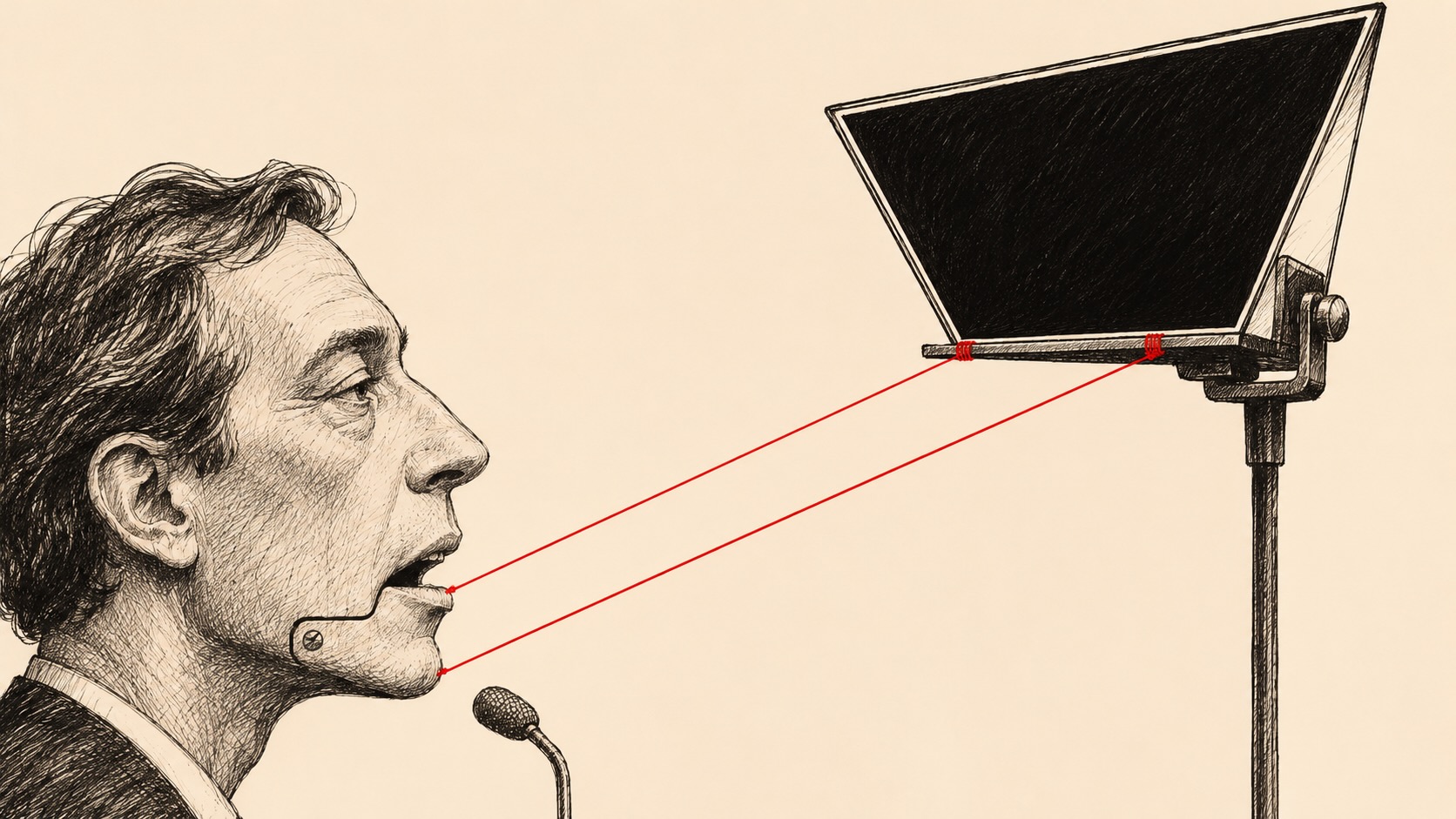
It’s not the obvious AI slop—the kind I instinctively avoid—that bothers me. My generation still has the ability to distinguish between human-made content and AI output. What I’m noticing is more subtle. Many creators still use their own voice and even appear on camera, speaking as if naturally—but they’re clearly reading from a teleprompter. Others only show clips with voiceovers. Even when it’s their real voice, it’s obvious they’re reading a script entirely written by an LLM. And I mean ENTIRELY. The beginning, middle and end, it often feels like NO edits were made after the initial prompt.
This is more uncanny than outright AI generated videos, with animated faces and generated voices. It’s the phrasing. Yes, the phrasing is unmistakable. The “It’s not A, but B” constructions. The polished yet formulaic cadences. The over-reliance on tripartite lists, etc. Many of us can’t quite put our finger on it, but you feel it. Once you notice it, you can’t unsee it.
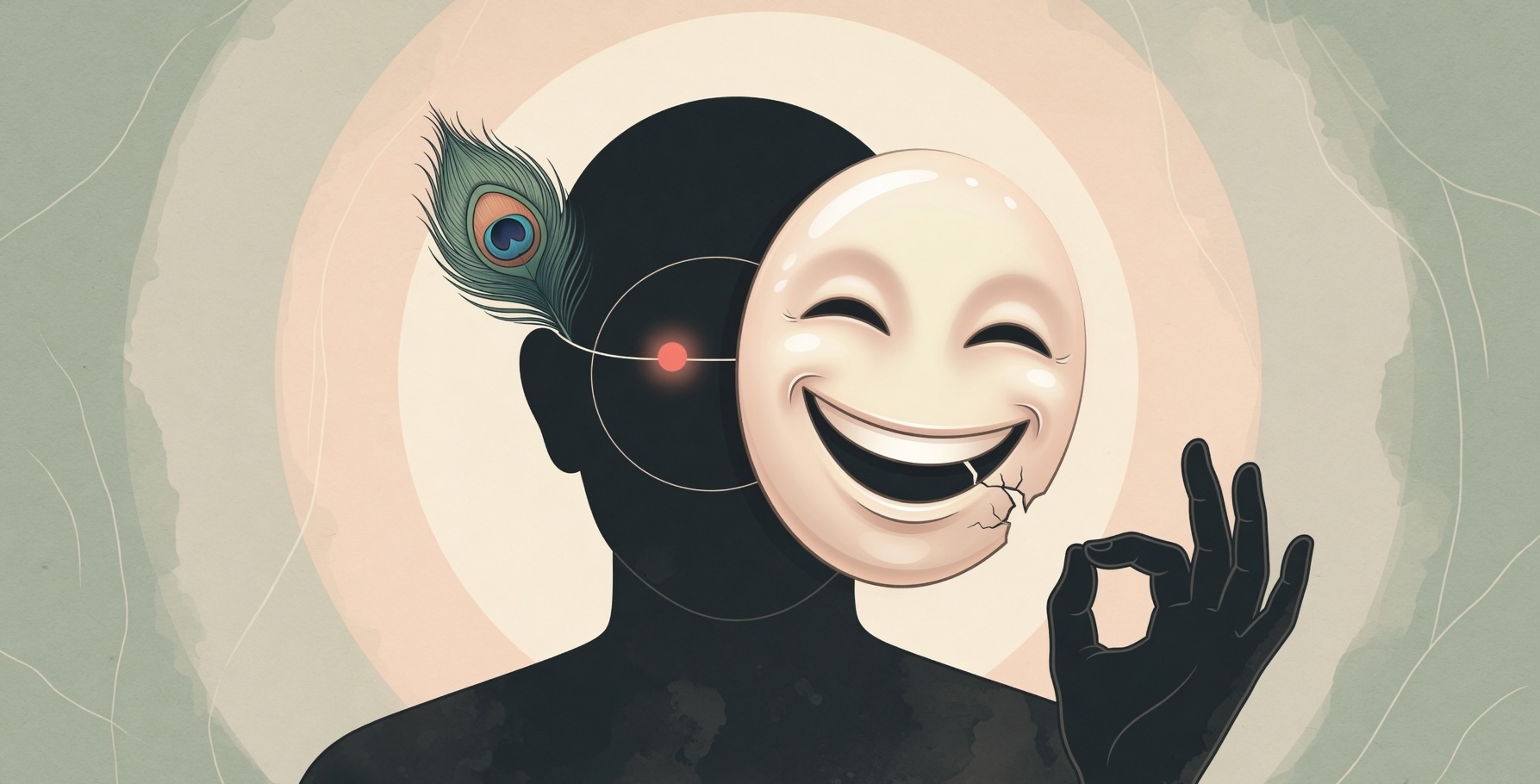
What comes to mind is the Dead Internet Theory. The internet might be half-dead. The walking (talking) dead. LLMs generate the output and humans read it aloud with their own lips and voices. Biological receptacles “possessed” by the spirit of the machine. The very inversion of Ghost in the Shell. Who would have thought!
Sure, some creators probably start with their own ideas and then run them through an LLM to polish or expand, or edit, or cut down, and what have you. I do something similar with the notes that I take. Right now, as I record this, I’m using a script that listens to a voice memo, removes false starts, the umms, uhhhs, cleans up grammar slightly, and adds punctuation—basically what a good assistant would do.
I use it to take notes that I can later expand into essays or articles. Then I read the text myself (in this case, the very text you’re reading now, that I’m currently typing, because I’ve moved to typing by this point, but let’s not get too Kerouacian stream-of-consciousness).
But what we’re facing is a blurry era where the boundary between human and machine output is increasingly hazy.
A question emerges: when can you still consider something your own? After how many revisions? After how many grammar fixes, stylistic tweaks, or structural rewrites, deletions? What is the scope of these changes before it stops being “yours”? (I guess an answer will emerge - but let’s be patient for now, for now - we are thinking out loud).
I hope we see more conversations about this, especially in fields like Dharma translations, where I work. I do use LLMs to automate tedious tasks like consistency checks or scanning for repeated phrases across large corpora, things that would be nearly impossible manually, or take inordinate amount of time. But I still am mindful of what is and what isn’t my own (or - the authors) voice. And yet, the boundaries are anything but clear.
What’s frightening is how few people seem to notice or care. I’ve seen almost no videos discussing this specific phenomenon. OK, scratch that - none. No videos, although there are a few notable articles.
This one so good, that me writing this now is practically redundant (but still, we will go ahead with it).
Most people seem to treat AI as if only they had access to it, as if it were a secret productivity superpower. That illusion works only if no one else is using it. But now, everyone is. AI writes your email, and AI reads the reply on the other end. If you find gold - it’s only a valuable treasure, provided few people have gold. We all know what inflation means. What advantage can you have over others using exactly the same tool?
How many cycles of machine-to-machine communication can we go through before someone says, What are we doing? At what point do humans become mere cogs in a feedback loop of generated text, letting go of authorship, originality, and maybe even thought itself? Well - certainly, the thought itself.
Our neuroplasticity means that if this continues, even our natural speech and conversations may start resembling LLM output, without any additional technology needed. In a strange way, this might be how we blend with the machine—not through implants or chips, but through the quiet erosion of our own voice.
Trying to pay with fake currency
There’s a type of sneaky dishonesty that comes with using a large language model without telling the person you’re using it on. Take a personal email. It’s as if every LLM user assumes the person on the other end can’t tell. If someone sent me a ChatGPT-written letter, I’d almost take it as an insult. It feels like they couldn’t give me the time of day themselves. They had to use a machine to tell me what they think.
I detect a high level of dishonesty, even treachery, in that. If you couldn’t spend the time and risk sounding imperfect, why should I? You’re trying to pay with fake currency.
And what if the recipient also reads it with the aid of their own model and replies the same way? It’s the Invasion of the Body Snatchers.
The Bandwidth Problem
We’re blending with machines—not in the way Elon Musk imagined. His vision of human–machine blending was about bandwidth: increasing the upload and download of thought. I actually agree with that idea and champion it myself. But there’s a blindness that very smart people have, and Musk is among them. It’s hard for someone like him to imagine the thought process of a less intelligent person. You can hear him lay out his idea in his SXSW talk.
The idea of connecting a human and a machine was meant to solve a bandwidth problem. It’s a very understandable idea: for those who have a lot of ideas, urgent, quick and fully formed before they’re expressed - the speed of typing or producing sounds orally can be painfully slow. That’s the bottleneck Elon wanted to solve. To accelerate things for those who need rapid-fire speed for urgent and important thoughts they wanted communicated. But the tragedy (or comedy) of the current situation is the inversion of that premise - it’s the machine that does the thinking - and the meat-dragger (human) still transmits THAT at the sluggish speed of a meat dragging human - becoming a meat puppet.
As Stafford Beer put it, “The purpose of a system is what it does”, regardless of what the initial intention was. We are blending with technology whether we like it or not, whether we know it or not. Isn’t it more unsettling than full automation?
In The Conspiracy Against the Human Race, Thomas Ligotti describes the uncanny feeling of looking at ordinary, inanimate objects and then looking at human beings. We’re part of the same fabric, very much in the realm of matter, but how different. Animated by something we can’t explain (the hard problem of consciousness, a question for another essay, or twenty).
Ligotti, like Emil Cioran, is a proud pessimist. Cioran’s The Trouble with Being Born is a title that I think beautifully captures something of the First Noble Truth (without the second or third on the horizon, but I digress). To him - consciousness is an unnatural, festering anomaly in dead matter - it’s understandable. But here - we are witnessing a curious and fantastical reversal - regardless of how ill bad and ominously the flower of consciousness smelled - its petals are now closing, retreating, it atrophies, it wanes. The “limbs” of will go limp, as machines start to wear us like spirits possessing the unfortunate “mediums”.
Could you still say it?
Gosh, this has become little rambly, hasn’t it? Well, I promised some sort of answer, to the question of authorship. I’d propose this: if you have an idea - and then used an LLM to flesh it out, bring it into existence - by using your discernment, rejecting some and accepting some, using your TASTE, individual will - then you are the author. A good test for such authorship would be an actual live human interaction, like a conversation or an interview - if you can still say the thing you wanted to communicate with your own words, you’re good. How many will be able to still speak when the teleprompter malfunctions?
How many of us walk around with memorised scripts, possessed by them like some Egregore?
If you must - let a spirit posses you, perhaps a Dybbuk, a Dharma Protector, or even a stray disembodied Bardo being, but never, ever, under any circumstances allow yourself to become possessed by an LLM.